
 Fruit Vegetable Processing
 Nuts Processing Solution
 Pastry Processing Solution






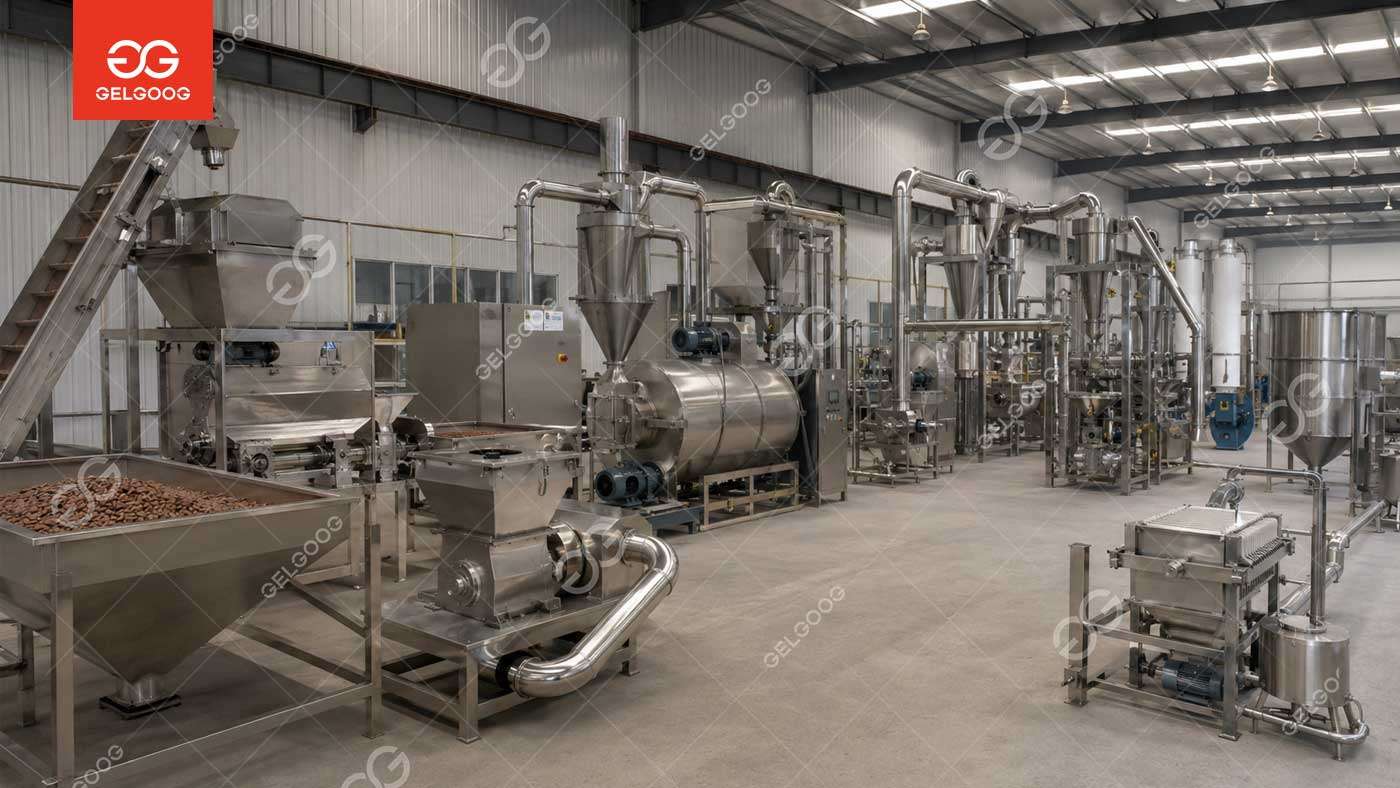
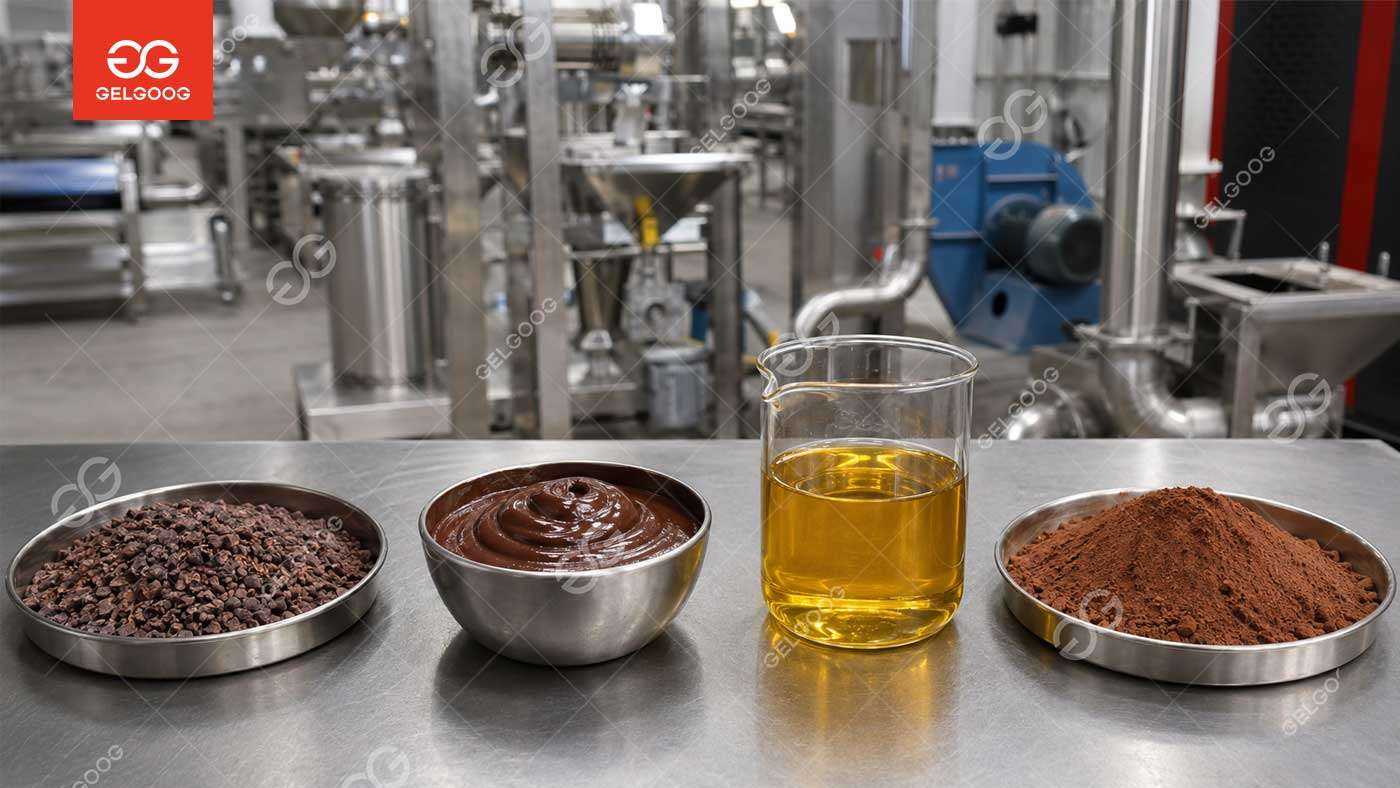
Cocoa nibs, cocoa liquor, cocoa butter and cocoa powder are not simply different outputs from one standard production line. Each path has a different equipment boundary, material flow and validation requirement. Before requesting a full quotation, you need to decide what product you will sell, whether cocoa butter has a confirmed outlet, and whether a powder specification is already defined. That decision determines which modules are essential now and which can be reserved for a later phase.
Three Questions to Answer Before You Choose a Cocoa Route
Before comparing equipment, answer these three questions:
Who will buy your final product?
Are you supplying nibs, cocoa liquor, cocoa butter, cocoa powder, or using the material in your own chocolate production?Do you have a confirmed outlet for cocoa butter?
If you add pressing, cocoa butter and cocoa cake are both generated. Your project should have a clear plan for both outputs.Do you have a defined powder specification?
If cocoa powder is your target product, confirm whether you need natural or alkalized powder and what fat-content, color and particle-size specification your buyer expects.
Your answers determine where the process should stop, which modules are essential now and which may be reserved for a later phase.
Start With the Product You Need to Sell
A cocoa processing project should begin with the commercial output, not with a list of machines.
For example, a bean-to-bar chocolate producer may need to control roasting, nib quality and cocoa liquor preparation, but may not need a cocoa butter press or powder grinding section. A regional ingredient processor planning to sell cocoa butter and cocoa powder will need a broader process scope, including pressing, cocoa cake handling and powder preparation.
The key question is not, “What is the best cocoa processing machine?”
“Which cocoa intermediate product do we need to make, and which processing stages are essential to make it consistently?”
| Final product | Typical commercial use | Core processing stages | Modules that may not be needed initially | Main project question |
|---|---|---|---|---|
| Cocoa nibs | Chocolate making, inclusions, snack ingredients or further grinding | Cleaning, roasting, cooling, cracking, winnowing and screening | Liquor grinding, pressing and powder grinding | Can the line produce clean nibs with an acceptable level of shell and breakage? |
| Cocoa liquor | Chocolate, compound products, bakery, beverage and ingredient applications | Nib production plus grinding and liquor handling | Butter pressing and powder section | What fineness, consistency and downstream handling are required? |
| Cocoa butter + cocoa cake | Chocolate, cosmetics, bakery and ingredient applications | Liquor production, pressing, butter collection and cake discharge | Final powder section may be added later | Is there a clear outlet for both cocoa butter and cocoa cake? |
| Cocoa powder | Beverage, bakery, dairy, confectionery and ingredient applications | Nib production, liquor grinding, pressing, cake breaking, powder grinding and packing | Major upstream stages should not be omitted | What powder specification and packaging format are required after pressing? |
Not Sure Which Cocoa Route Fits Your Project?
Share your target product, planned capacity, cocoa bean information, and whether you have a confirmed outlet for cocoa butter. GELGOOG can help define an initial processing scope and identify which modules can be reserved for a later phase.
Get a Preliminary Processing ScopeA cocoa powder project, for example, cannot be defined as “a grinder for cocoa beans.” Grinding cocoa beans or nibs produces cocoa liquor because of their natural fat content. Cocoa powder normally requires pressing the liquor first, then processing the resulting cocoa cake.
For a broader view of the available paths, see the GELGOOG cocoa processing solution.
Path One: From Cocoa Beans to Cocoa Nibs
The nibs route is suitable when your final product is roasted cocoa nibs, or when nibs are the controlled intermediate material for your own chocolate or liquor production.
A typical nibs route includes:
Raw bean receiving and removal of unsuitable material;
Roasting;
Cooling;
Cracking;
Winnowing to separate shells from nibs;
Screening or classification where needed.
The purchasing decision is not only about throughput. Bean size distribution, shell condition, moisture, fermentation level, foreign material and the desired roast profile can all affect cracking behavior and shell separation.
This is especially important if you plan to sell nibs directly. Your buyers may care about shell residue, broken particles, roast consistency and batch-to-batch appearance. A machine quotation alone cannot confirm those results. You should first prepare a raw material description and, where possible, arrange sample evaluation.
For the cracking and separation stage, see the cocoa bean cracker and winnowing machine. Final configuration should be matched to your bean condition and output target, rather than selected only from a standard capacity label.
Path Two: From Nibs to Cocoa Liquor
Cocoa liquor, also called cocoa mass, is produced by grinding cocoa nibs until their natural cocoa butter content forms a fluid or paste-like material.
This route is appropriate when you want to make your own chocolate base, supply liquor to other food manufacturers, or gain more control over ingredient sourcing and product formulation. It may also be the most logical first step for a processor that expects to add pressing later but does not yet have a defined market for cocoa powder.
The important project boundary is that cocoa liquor production is not automatically a cocoa powder project.
Before adding a press, you should confirm:
Whether you will use the liquor internally or sell it as an ingredient;
Required product consistency and fineness;
Whether downstream processing requires holding, pumping or temperature management;
Whether there is a realistic commercial plan for the cocoa butter and cocoa cake that pressing will create;
Whether the first phase should remain at liquor production while space and interfaces are reserved for later expansion.
A liquor-only project can be a deliberate commercial choice. It is not an incomplete powder line if the target product and sales route are already clear.
Path Three: Adding Cocoa Butter Pressing
A cocoa butter press separates cocoa liquor into two commercially important outputs: cocoa butter and cocoa cake.
This route makes sense only when the project has considered both outputs. Cocoa butter may enter chocolate, bakery, cosmetics or other applications. The remaining cocoa cake can become an input for cocoa powder production, but it still needs further handling, breaking and grinding before it becomes a sellable powder product.
A pressing section changes the scope of your project in several ways:
You need a stable cocoa liquor supply before the press;
You need to define how extracted butter will be collected, filtered, cooled or transferred;
You need to handle discharged cocoa cake without creating unnecessary loss, contamination or manual bottlenecks;
You need to decide whether the cake will be sold, stored or processed into powder;
You need to review electrical, cleaning, layout and maintenance requirements for the complete section.
The required butter handling should also be defined before equipment selection. Butter storage and transfer temperature, filtration requirements and downstream handling should be confirmed according to its intended use. Cocoa butter for different downstream applications should not be assumed to require the same post-pressing arrangement.
The automatic cocoa butter press machine should therefore be evaluated as part of the complete material flow, not as an isolated machine purchase.
A common project mistake is to add a press because cocoa powder appears commercially attractive, without confirming what will happen to the cocoa butter, how cake will be handled, or what powder specification the market requires.
Path Four: From Cocoa Beans to Cocoa Powder
The cocoa powder route is the broadest project path. It includes all major upstream processing stages and should be planned as a connected system.
Cocoa beans → roasting → cooling → cracking and winnowing → nibs → grinding into cocoa liquor → pressing → cocoa butter + cocoa cake → cake breaking → powder grinding → packing
The exact modules, automation level and packaging arrangement still depend on your project. For example, the final powder may be packed in industrial bags for ingredient supply or in smaller retail-ready formats. These are different packaging and handling decisions even if the upstream cocoa process is similar.
Before selecting a powder line, you should define:
Whether natural or alkalized powder is required, and what fat-content, color and particle-size specification the buyer expects;
The intended powder application;
Planned packaging formats;
Expected operating hours and production schedule;
Whether cocoa butter has a confirmed internal or external sales route;
Available plant space, power supply, heat source, ventilation and dust-control conditions.
The automatic cocoa powder production line can be configured around these processing stages. Final equipment scope should still be confirmed after the target product, raw material and site conditions are defined.
Do Not Compare Capacity Figures Without Defining the Basis
“500 kg/h” can mean very different things in a cocoa project.
It may refer to raw cocoa bean input, roasted beans, cleaned nibs, cocoa liquor, pressed cocoa cake or final powder. These are not interchangeable because each stage has its own material losses, moisture changes, shell separation and operational conditions.
When comparing suppliers, ask each one to state clearly:
| Capacity question | What you should ask |
|---|---|
| Input basis | Is the stated capacity based on raw cocoa beans, roasted beans or nibs? |
| Output basis | Is it based on cocoa liquor, cocoa butter, cocoa cake or packed cocoa powder? |
| Operating conditions | What raw material condition, shift pattern and automation level are assumed? |
| Loss and separation | How are shells, dust, screening losses and equipment residue treated in the calculation? |
| Packaging basis | Does the output include grinding and packaging, or stop before final packing? |
| Validation method | Which points should be confirmed through sample testing or FAT? |
This capacity definition is more useful than comparing one headline number. It helps you identify whether two quotations actually cover the same process scope.
A cocoa line rated by raw bean input cannot be directly compared with another quotation rated by packed powder output. The comparison is meaningful only when both suppliers define the same material basis and operating conditions.
Plan the First Phase Without Closing the Door to Expansion
Not every project needs to install the full beans-to-powder route at the beginning.
A company may first install roasting, winnowing and liquor grinding because these stages solve the most immediate sourcing, quality-control or production bottleneck. If plant layout, utilities and material flow are considered early, a pressing or powder section may be added later without redesigning the entire project.
A phased project can work well when:
Your first commercial output is clearly defined;
You have not yet confirmed a market for every downstream product;
Your investment needs to be divided into stages;
You are replacing one bottleneck in an existing process;
You want to validate raw material behavior before committing to a larger scope.
However, “modular” should not mean purchasing unrelated machines one by one. Even a phased project needs a future material-flow plan, space allowance, utility planning and equipment interface review.
The continuous cocoa roasting and cooling machine, winnowing system and pressing section should be considered as connected stages when planning a future expansion route.
What to Prepare Before Requesting a Cocoa Processing Proposal
You do not need a complete engineering package before contacting a supplier. But the following information will make the first discussion much more useful:
Raw cocoa bean origin and available bean information;
Approximate bean moisture and foreign-material condition, if known;
Final product or products you plan to sell;
Target daily or hourly output;
Expected operating hours or shifts;
Required packaging format;
Existing processing equipment, if any;
Available plant space and layout limitations;
Available electricity, heat source, ventilation and other utilities;
Whether sample testing or product verification is required before final selection.
With this information, the project discussion can move from a generic machine quotation to a preliminary processing scope.
FAQ
Do I need a complete cocoa powder line if I only want to produce chocolate?
Not necessarily. If your project only needs cocoa liquor for chocolate production, a roasting, winnowing and grinding route may be more relevant. Pressing and powder production should be added only if cocoa butter and cocoa cake have a defined use or market.
Can cocoa powder be made directly by grinding cocoa beans?
No. Grinding cocoa beans or nibs produces cocoa liquor because of the natural fat content. Cocoa powder normally requires pressing the liquor first, then processing the resulting cocoa cake.
Is a cocoa bean peeling machine the same as a winnowing machine?
The terms are often used around the same processing stage, but the actual equipment configuration may differ. Confirm whether the system includes cracking, airflow separation, screening and dust handling, and whether it suits your raw bean condition.
What should I provide for raw material testing?
Provide representative cocoa bean samples where possible, together with bean origin, approximate moisture, visible impurities, target product and desired output. The final test plan should be agreed with the technical team.
Can I install pressing and powder grinding later?
Yes, in some projects. But future expansion should be considered during the first-stage layout, utility and material-flow planning. Otherwise, later additions may create unnecessary transfer, space or interface problems.
Does one rated capacity apply to every cocoa product?
No. Raw bean input, nib output, cocoa liquor, cocoa butter, cocoa cake and final powder are different production bases. Each supplier quotation should state exactly which basis is being used.
Plan Your Cocoa Processing Scope Before You Request a Full Quotation
Before selecting individual machines, define the final product, raw material condition, target output and expansion plan.
Send GELGOOG your target cocoa product, bean information, planned operating hours and available plant conditions. Our team can help you prepare a preliminary processing scope, clarify the capacity basis and identify which points should be confirmed through raw material evaluation or sample testing.
Get Your Preliminary Processing Scope Discuss Your Project on WhatsApp