
 Fruit Vegetable Processing
 Nuts Processing Solution
 Pastry Processing Solution






A baby spinach washing and drying line should be specified by the condition and quantity of leaves reaching packaging, not by the washer’s rated throughput alone. The right arrangement depends on the finished product, the condition of incoming leaves, the material to be removed and the packaging target. If the same line will handle spring mix, both products need to be evaluated. Washing performance, surface water, leaf damage, sorting results and sustained line throughput should be assessed with representative material before final acceptance criteria are agreed.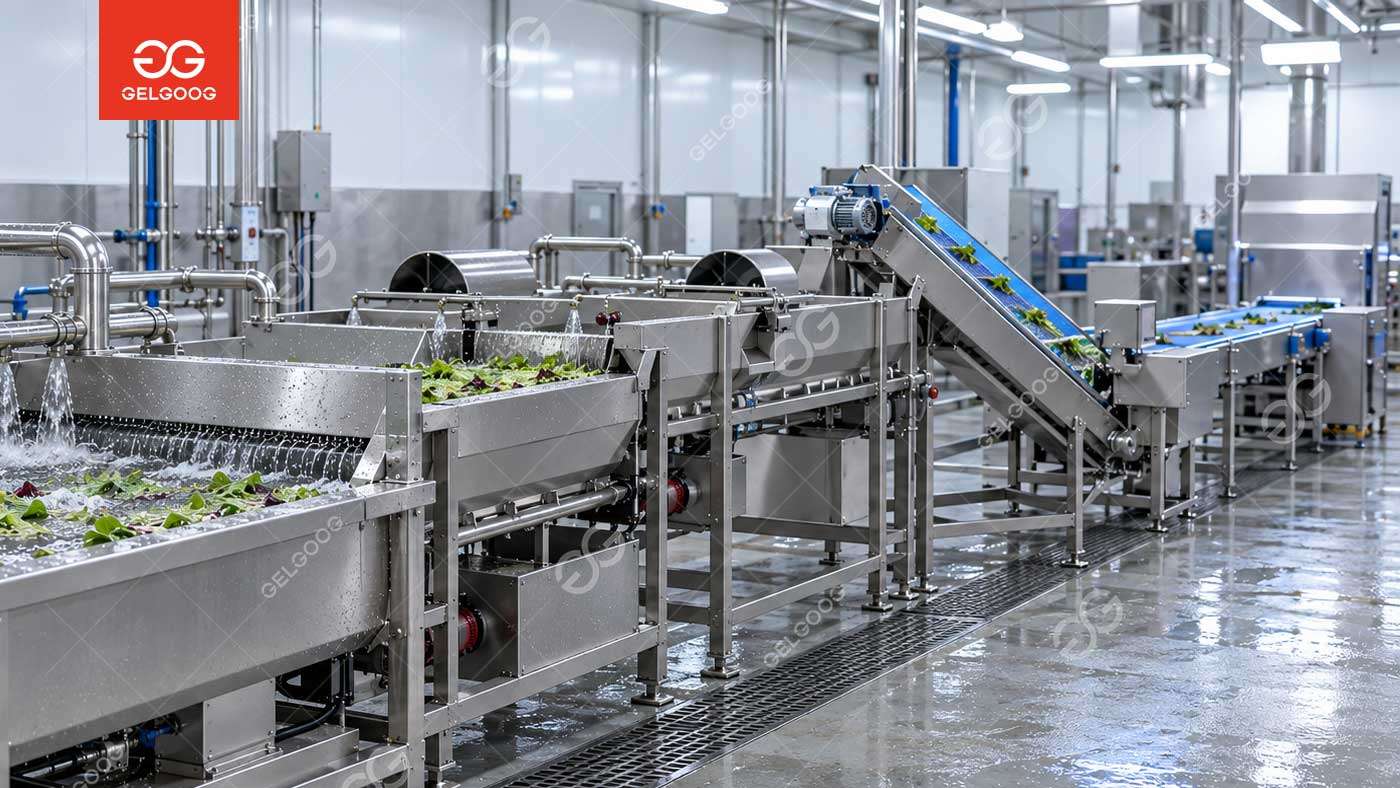
Start With the Product You Intend to Pack
The first question is what the customer will receive. Loose baby spinach intended for further handling and a prewashed, ready-to-eat salad may call for different process discussions. Spring mix adds another variable: its leaf types and proportions can change how the product feeds, moves through water, drains and reaches the packer.
Before anyone lays out equipment, agree on the following operating facts:
The finished product and its intended use.
Whether baby spinach and spring mix will run separately or as different recipes on the same line.
The incoming condition of each product, including soil, field debris, damaged leaves and temperature.
The required leaf appearance and surface condition at the packaging infeed.
The packaging format and the packer’s required feed rate.
The processor’s quality and food safety requirements.
These answers define the equipment discussion. They also identify decisions that belong to the processor’s production and quality teams.
For applicable U.S. operations, the FDA’s August 2026 guidance addresses biological-hazard controls for ready-to-eat fresh-cut produce under preventive-controls requirements. Its scope depends on the product and the type of operation. The guidance should be read alongside the processor’s own hazard analysis and verification program; it does not, by itself, determine the equipment configuration for a particular baby spinach or spring mix project.
Map the Full Route From Incoming Leaves to the Packer
A practical layout starts with the interfaces between operations. Incoming inspection, feeding, washing, draining, further water removal, sorting and packaging may all be relevant. Their order should follow the product specification and the condition of the leaves at each transfer point.
Process decision | What the project team needs to establish | What needs verification |
|---|---|---|
| Receiving and feeding | Incoming leaf condition, batch handling and feed uniformity | Whether feeding creates clumps, overlap or surges |
| Washing | The material to be removed and the proposed water flow and handling method | Results on baby spinach and each relevant spring mix recipe |
| Water removal | The surface condition required at the packaging infeed | Residual surface water and leaf integrity under defined conditions |
| Sorting and inspection | The specific unwanted objects or leaf defects | Detection, false rejects and product presentation during testing |
| Packaging interface | Required product flow, format and operating schedule | Whether the upstream line sustains the packer’s demand |
Check Your Pack-Ready Capacity Basis
Send your target pack-ready lb/h, baby spinach or spring mix specification, incoming leaf condition and packaging-machine details. GELGOOG can help map the wash, water-removal and packaging interfaces that need material testing before the final scope is set.
GELGOOG’s salad vegetable processing solution shows the broader process context. Its leafy vegetable washing equipment and salad leaves washer provide starting points for discussing the wash section. The project layout must then connect those operations to the specified leaf condition and the existing or proposed packer.
Pay particular attention to the transfer into packaging. A washer may have sufficient nominal throughput but discharge leaves in an uneven flow. The proposal needs to show transfer points, any accumulation or buffering requirement, control interfaces and who is responsible for each connection.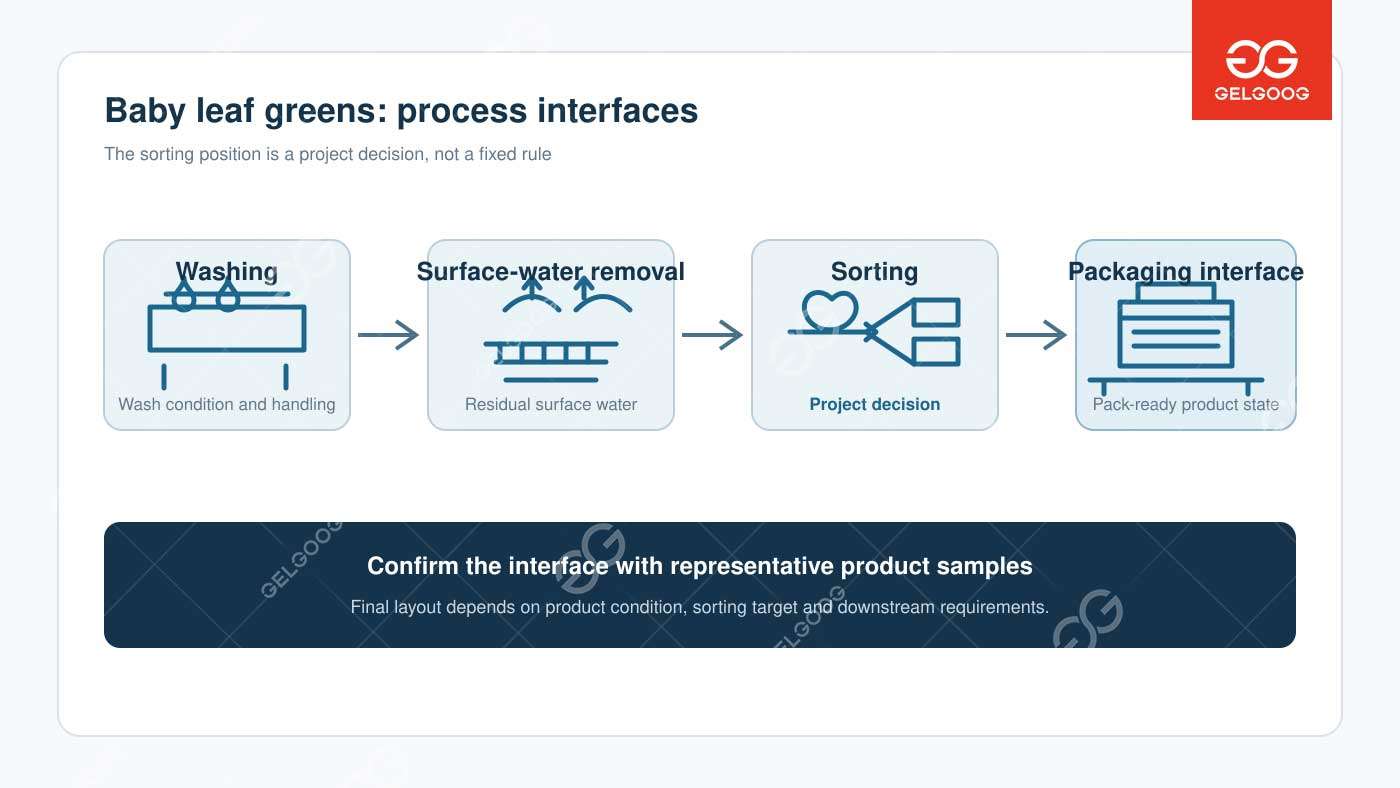
Specify Water Removal by Leaf Condition
For fresh baby leaves, “drying” usually means removing free surface water before packaging. It does not mean producing a dehydrated, shelf-stable vegetable.
The useful question is: What condition must the leaves reach without unacceptable damage? A setting that removes visible water may still leave wet pockets in a mixed product flow. A more intensive setting could alter leaf appearance or increase rejected product. A dryer nameplate cannot resolve that trade-off.
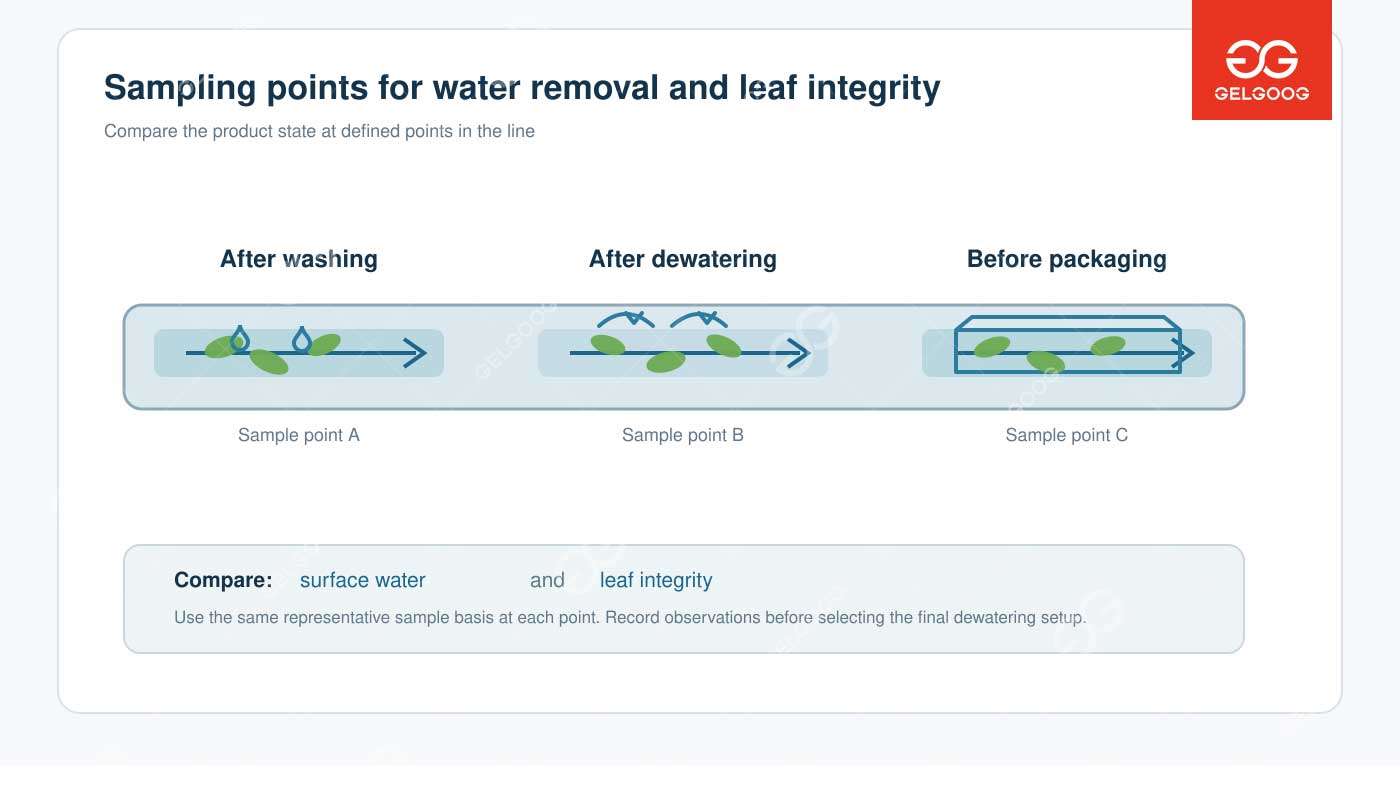
A material trial can compare incoming and discharged leaves under agreed conditions. Before testing, the processor and supplier should define:
How baby spinach and spring mix samples will be prepared and fed.
Where samples will be collected and at what point in the run.
How visible free water or another agreed surface-water measure will be recorded.
What counts as a torn, bruised, compressed or otherwise unacceptable leaf.
How rejected product will be identified and weighed.
Whether the leaves remain acceptable at the planned packaging infeed rate.
Use the same sampling and scoring method across the test runs. Otherwise, a wetter but less damaged sample and a drier but more damaged sample cannot be compared fairly.
GELGOOG does not currently have baby spinach or spring mix trial results available to publish for residual water or leaf damage. For a defined project, those results can be established through testing with the customer’s material and an agreed evaluation method.
Decide What Sorting Must Remove—and Where It Belongs
“Intelligent sorting” is too broad to serve as a purchase specification. Name the targets first: particular foreign material, field debris, yellow leaves or other visible defects. The target determines what must be presented to the inspection system, how removal might work and which samples are needed for a meaningful trial.
The project team can compare sorting before and after washing as part of the proposed process layout. The final position, inspection method and removal mechanism should be confirmed against the defined targets and representative material.
Before washing: Examine whether removing a specified target at receiving or early in the process would help the downstream flow. Record how the incoming leaves and target material are presented.
After washing: Examine whether washing changes the target’s visibility and whether wet or overlapping leaves affect inspection.
At more than one point: Consider this when the positions address different, clearly defined targets and the additional equipment has a purpose in the process.
A sorting trial should record the target samples, material feed rate, product presentation, what was removed, what remained and how many acceptable leaves were rejected. A result for baby spinach cannot simply be assigned to every spring mix recipe.
Sorting addresses its specified inspection targets. Biological-hazard controls require a separate assessment within the processor’s food safety program.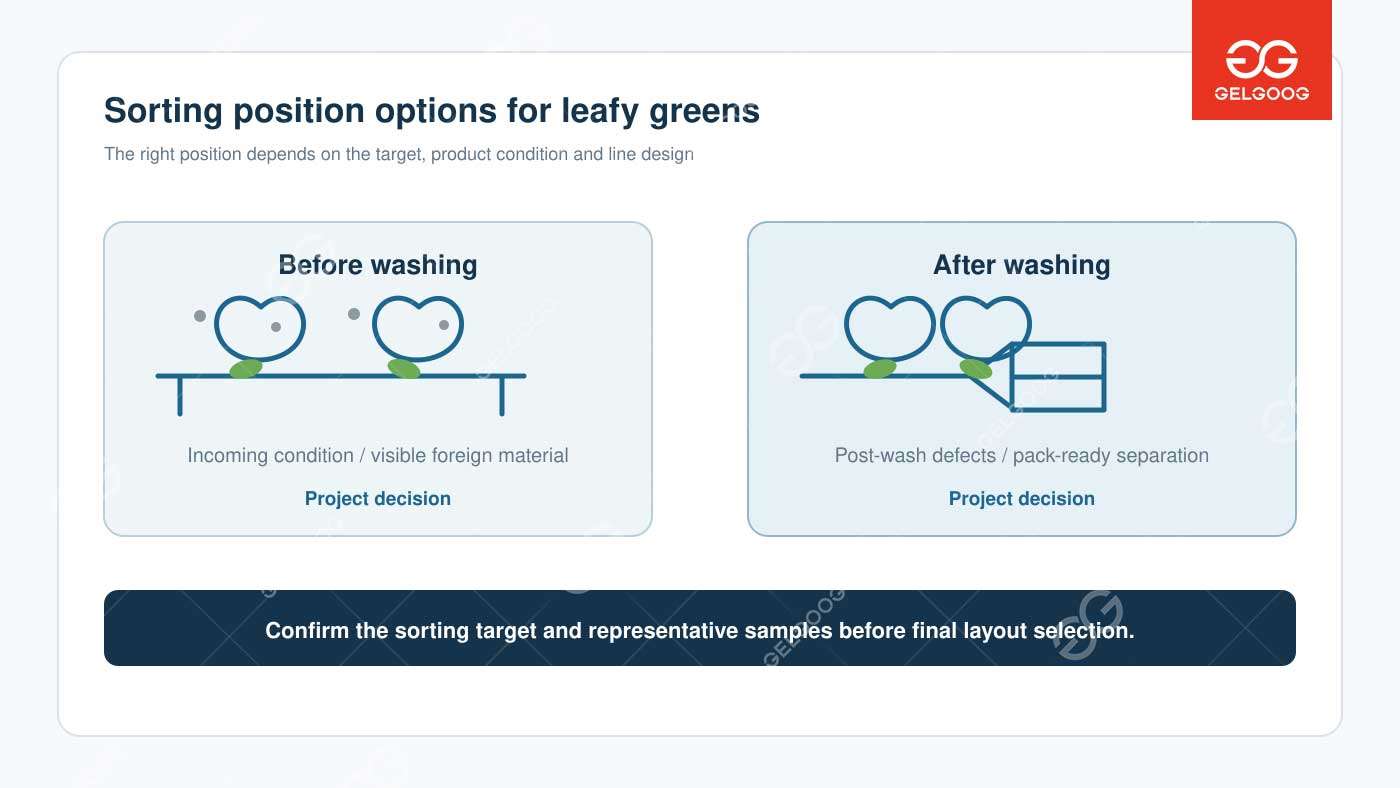
Calculate Capacity at the Finished-Product Boundary
When comparing proposals, ask where each capacity figure is measured. “Pounds per hour” might refer to raw leaves entering the line, material passing through one washer, leaves leaving water removal or accepted product reaching packaging. Those figures answer different questions.
Start with the planned accepted, pack-ready output in lb/h. Then work backward through expected rejects, handling losses, operating interruptions and the sustained capacity of each stage. Until trials or operating records support them, these remain assumptions to be shown on the capacity sheet, not fixed percentages to insert into a quotation.
Ask each supplier to show the following on that sheet:
The capacity boundary: incoming raw leaves or accepted leaves at packaging.
The material and recipe used for the figure.
The assumed incoming condition and feeding method.
The continuous operating period used for evaluation.
The wash, water-removal, sorting and packaging rates.
The time allowed for cleaning and product changeover.
Any assumptions about rejects, recirculation or manual inspection.
The slowest sustained operation—and its ability to feed the next stage—sets a practical limit on output. If baby spinach and spring mix will alternate on one line, compare them as separate operating cases. Their pack-ready rates may differ even when the equipment is the same.
Define the U.S. Project Scope Before Requesting a Final Quote
An early quotation is more useful when it identifies both the included equipment and the open interfaces. This matters when the processor already has a packer, conveyors, a water system or part of a wash line.
Send a short project brief covering the product and intended use, representative samples, target pack-ready lb/h, operating schedule, sorting targets, existing equipment, available floor area, water and drainage arrangements, packaging interface and installation location. Identify who can authorize sample testing and who will approve the acceptance criteria.
In return, request a conditional process flow, equipment scope, interface list, site-information checklist and proposed material test. GELGOOG provides installation, commissioning and equipment-operation support as part of its project services. For a U.S. project, the exact on-site scope, schedule, training and after-sales arrangements should be confirmed in the proposal.
At this stage, the useful output is a process layout that production, engineering and quality can challenge before anyone commits to the final configuration. It gives the team a way to find missing information while changes are still relatively easy to make.
Frequently Asked Questions
Can one line handle both baby spinach and spring mix?
A shared line can be evaluated, but both products need to appear in the operating requirements. Spring mix composition, incoming condition and pack-ready appearance may change feeding, water removal and sorting behavior. Use separate test cases where those differences affect the decision.
Should sorting be installed before or after washing?
Define the material or defect to be removed, then compare how it appears before and after washing. Product presentation, inspection method and removal mechanism determine which position makes sense. A layout decision should follow testing with representative leaves and target samples.
What drying result can GELGOOG state for baby spinach?
GELGOOG does not have an existing baby spinach or spring mix result available to publish for residual surface water or leaf damage. A qualified project can establish a test method, collect samples and agree on acceptance criteria before a performance commitment is made.
Does a washer’s rated capacity equal packaged salad output?
No. A washer rating describes that machine under stated conditions. Accepted product at packaging also depends on feeding, rejects, water removal, sorting, transfers, packer speed and operating time. Ask for the measurement point and assumptions behind every lb/h figure.
Can washing and sorting replace the processor’s food safety controls?
No. They perform defined process and inspection functions. The processor still needs to assess the biological hazards relevant to its product and operation and determine the applicable controls and verification activities. The FDA’s ready-to-eat fresh-cut produce guidance provides recommendations for operations within its stated scope; it is not a guarantee attached to a machine.
Get a Line Fit Check for Your Leaves
If you are planning or upgrading a baby spinach or spring mix line, send GELGOOG your product specification, target pack-ready lb/h, incoming leaf condition, sorting targets and existing packaging equipment. We can prepare an initial process and interface discussion, identify the questions that require samples, and propose how to evaluate water removal, leaf integrity and sorting results before the equipment scope is finalized.