Algeria’s seasonal green pea supply creates a practical opportunity for processors to convert fresh pea pods into IQF frozen green peas for B2B distribution. A complete processing line can help businesses reduce the pressure of peak-season sales, improve product consistency, and supply frozen vegetables beyond the fresh-harvest period.
For a processor, wholesaler, agricultural cooperative, or food investment company, the opportunity is not simply to purchase a freezing machine. The real project is to connect fresh pea pod collection, shelling yield, controlled blanching, IQF freezing, B2B packaging, cold storage, and sales channels into one workable operation.
Green peas are supplied seasonally in Algeria, with production commonly associated with areas such as Biskra, Tipaza, Boumerdès, Mostaganem, and Tlemcen. Fresh peas are time-sensitive: once harvested, quality can decline through moisture loss, sugar-to-starch conversion, color change, and mechanical damage. Processing them rapidly into frozen products can give businesses more flexibility than relying only on fresh-market sales.
Why Frozen Green Peas Are Relevant for Algeria
Frozen green peas can help Algerian produce businesses extend the commercial value of a seasonal crop by making it available for B2B customers throughout the year. The model is especially relevant where fresh supply peaks within a short period but demand comes from retailers, foodservice distributors, food factories, and cold-chain traders over a longer cycle.
Algeria has a meaningful vegetable-production base, while frozen fruit and vegetables are becoming a more visible segment of the processed-food market. Industry reporting also identifies cold-chain limitations as an important constraint, which makes well-planned processing and storage capacity essential rather than optional. Djazagro’s overview of processed fruit and vegetable trends in Algeria
highlights both the growth potential and the infrastructure challenges in this category.
The commercial value of an IQF green pea project may include:
Reducing exposure to fresh-pea price fluctuations during the main harvest period;
Converting short-life produce into a product suitable for cold-chain distribution;
Supplying standardized peas for foodservice, distributors, and food manufacturers;
Creating more stable product specifications for weight, color, cleanliness, and particle size;
Expanding the same processing site to other compatible vegetables outside the pea season.
However, the project should be evaluated carefully. Frozen-product demand, refrigeration capacity, electricity supply, water treatment, raw-material procurement, and sales channels all affect whether a line can operate profitably.
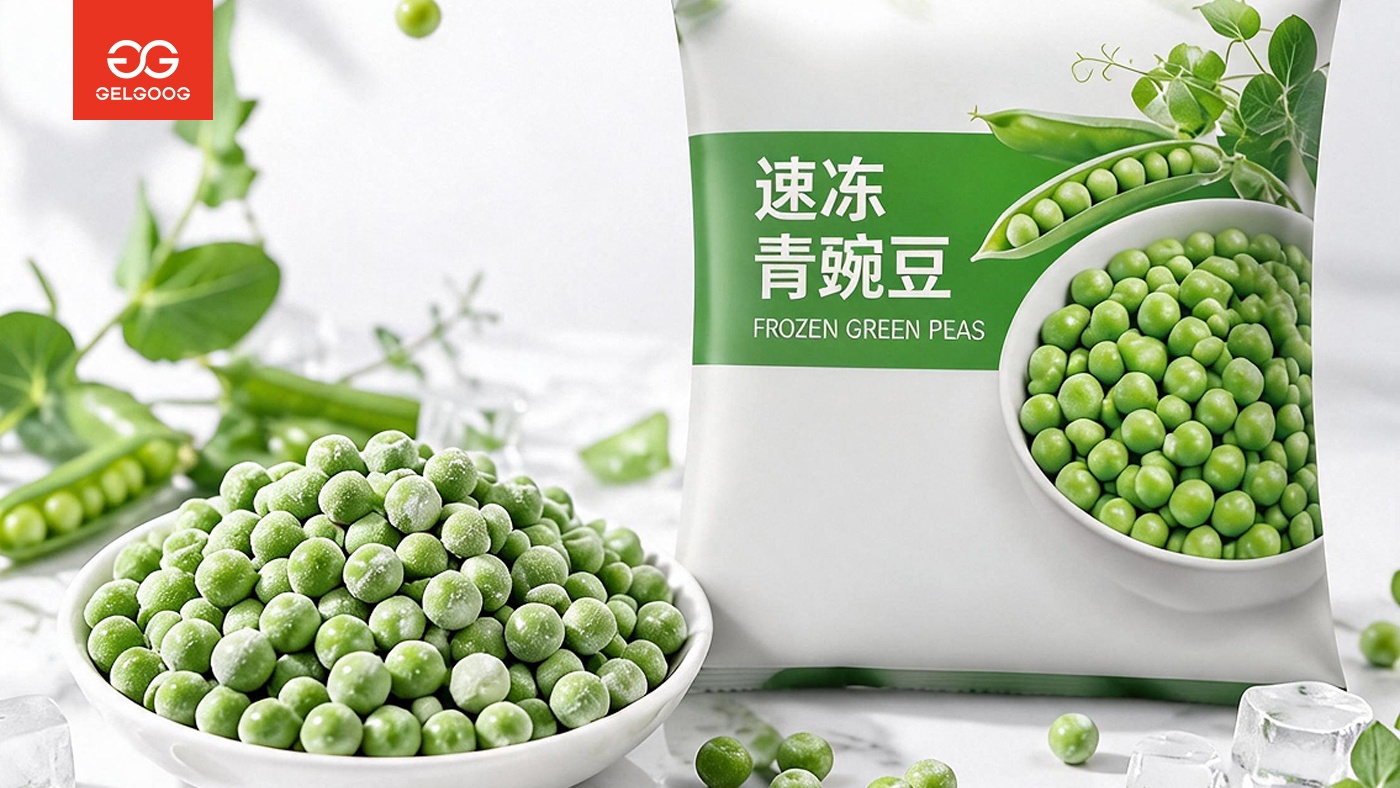
From Fresh Pea Pods to IQF Product: The Complete Processing Route
A commercial green pea freezing project should begin with fresh pea pods and control every step through shelling, cleaning, blanching, IQF freezing, packing, and cold storage. This approach is particularly important when the goal is to sell stable, food-safe B2B frozen products rather than simply freeze raw vegetables.
For this project type, the typical process is:
Fresh pea pod receiving
Inspection and removal of unsuitable raw material
Pea shelling
Washing and separation
Grading or sorting
Blanching
Cooling
Dewatering
IQF freezing
Inspection, weighing, and packaging
Frozen storage and cold-chain dispatch
Raw Material Receiving and Shelling
Fresh pea pods should be processed as soon as possible after harvest. Delays can affect tenderness, sweetness, color, and final product quality. The receiving area should allow operators to inspect incoming pods, remove visibly damaged material, and manage temporary buffering without excessive waiting time.
Shelling is a major part of the project because GELGOOG’s solution starts from pea pods rather than pre-shelled peas. As a planning reference, 1 kg of fresh pea pods may produce approximately 0.5 kg of pea kernels, or about a 2:1 pod-to-kernel ratio. Actual yield varies according to pea variety, pod maturity, moisture, field conditions, and shelling losses.
This yield relationship is critical for capacity planning. A line described as 1,000 kg/h fresh-pod input does not mean 1,000 kg/h of finished pea kernels. Investors should calculate processing capacity, freezing load, packaging demand, and cold-storage needs based on the expected kernel output.
Washing, Grading, and Quality Preparation
After shelling, pea kernels need controlled washing and inspection. The objective is not only to remove surface impurities but also to prepare a more uniform product for blanching and freezing.
Depending on the target specification, the line may include:
Bubble washing or water-channel washing;
Vibratory cleaning and drainage;
Size grading;
Optical sorting or manual inspection;
Foreign-material removal;
Product transfer systems designed to reduce damage.
A consistent product size supports more uniform blanching and freezing. It also improves the appearance of packed IQF peas, especially for customers that sell 500 g and 1 kg commercial packs.
Why Blanching Is a Key Step Before IQF Freezing
Blanching helps stabilize green pea color, enzyme activity, and final frozen-product quality before IQF freezing. It is not a decorative process step; it is one of the main controls that affects shelf-life stability and product appearance.
Green peas contain natural enzymes that can continue affecting quality during storage. Proper blanching, followed by rapid cooling, can help reduce undesirable quality changes. The exact operating conditions should be developed according to the pea variety, size, maturity, desired texture, hygiene requirements, and downstream freezing conditions.
| Process area | Main purpose | Project consideration |
|---|
| Blanching | Stabilize product quality and reduce enzyme activity | Time and temperature must suit pea size and maturity |
| Cooling | Stop the thermal effect after blanching | Fast cooling helps protect texture and color |
| Dewatering | Remove excess surface water | Important to reduce ice buildup and product clumping |
| Product transfer | Move peas evenly toward the freezer | Gentle conveying helps limit breakage |
Over-processing can make peas too soft, while insufficient blanching can weaken frozen-storage quality. For this reason, a processing-line supplier should evaluate the raw material and desired finished-product standard before finalizing the blanching configuration.
Choosing the Right IQF Green Peas Processing Capacity
The correct line capacity depends on fresh pea pod supply during the harvest period, expected shelling yield, operating shifts, and available cold-chain capacity. Choosing a line based only on a desired finished-product output can lead to under-sized shelling, refrigeration, or storage sections.
GELGOOG can configure green pea processing lines for approximately 300–2,000 kg/h of fresh pea pod input, with larger projects customized around raw-material availability and factory conditions.
The table below provides a practical planning framework.
| Fresh pea pod input | Approximate pea kernel output* | Typical project fit | Main planning priority |
|---|
| 300–500 kg/h | 150–250 kg/h | Pilot-scale or smaller regional processing project | Build a scalable processing and cold-storage model |
| 800–1,200 kg/h | 400–600 kg/h | Cooperative, produce trader, or regional frozen-vegetable processor | Match peak-season raw material with daily freezing and packing capacity |
| 1,500–2,000 kg/h | 750–1,000 kg/h | Industrial project with reliable sourcing and cold-chain distribution | Coordinate raw-material intake, refrigeration, storage, and multi-shift operation |
| Above 2,000 kg/h | Customized | Large agricultural or industrial investment project | Complete engineering review of supply, utilities, logistics, and sales volume |
*Illustrative calculation based on an approximately 2:1 fresh-pod-to-kernel ratio. Actual results vary by variety and processing conditions.
For example, if a processor plans to receive 1,000 kg/h of fresh pea pods, the expected pea-kernel flow may be around 500 kg/h. The IQF freezer, packaging area, and cold storage should then be planned around the actual frozen product flow, not only the raw-pod intake.
B2B Packaging and Cold-Chain Planning
For Algerian B2B frozen pea projects, packaging and cold-chain planning should be designed together with the processing line. A frozen product only creates value when it can maintain quality from the factory through storage and delivery.
The confirmed product direction for this project is primarily B2B distribution, with 500 g and 1 kg packs as common commercial formats. These formats may serve distributors, supermarkets, foodservice customers, and food businesses, depending on the local sales model.
A typical finished-product section may include:
Frozen pea inspection;
Metal detection where required by the project standard;
Multihead weighing or weighing systems;
Bag filling and sealing;
Date coding and labeling;
Cartoning or secondary packing where needed;
Frozen storage before dispatch.
Algerian projects should also consider product labeling requirements, sales-channel requirements, and local food-control expectations before packaging materials are finalized. The U.S. International Trade Administration notes that Algeria has standards and labeling requirements affecting food and consumer products, including Arabic labeling considerations. Algeria trade standards guidance
Cold storage is equally important. An IQF freezer can rapidly freeze the product, but it does not replace frozen storage, temperature-controlled dispatch, or distributor-level cold-chain management. Businesses without a stable cold-chain route should first evaluate whether they will sell through regional distributors, food factories, centralized warehouse channels, or their own frozen-food network.
A Multi-Vegetable Line Can Improve Seasonal Utilization
A green pea IQF line can potentially process other compatible vegetables, helping processors use their factory and refrigeration assets beyond the pea season. The exact suitability depends on the product, pre-treatment requirements, capacity target, and desired quality standard.
Possible additional products may include:
This does not mean every product should run on the same configuration without adjustment. Different vegetables may require different washing methods, cutting equipment, blanching conditions, sorting systems, and packaging specifications. But a multi-product design can be an important consideration for projects that want to reduce seasonal idle time.
For Algeria, this is especially relevant because the economic case should not depend entirely on one short green pea season. A feasibility review should examine crop calendars, supply agreements, sales plans, and changeover requirements before selecting a multi-vegetable configuration.
What Should Be Confirmed Before Investing?
A frozen green pea processing project should be confirmed through raw-material, utility, cold-chain, and sales analysis before final equipment selection. Equipment capacity alone cannot determine whether the project is operationally suitable.
The most important questions are:
How many tons of fresh pea pods can be supplied during the peak season?
What variety, maturity, and quality level will the processing plant receive?
What yield can realistically be expected after shelling?
How many operating hours or shifts are planned during harvest?
Is the factory close enough to production areas to protect raw-material freshness?
What water, electricity, refrigeration, drainage, and cold-storage capacity are available?
Will the product be sold through distributors, foodservice, retailers, or food manufacturers?
Which pack sizes and labeling requirements apply to the intended sales channel?
What other vegetables can be processed during the off-season?
What installation, training, maintenance, and spare-parts support will the project require?
GELGOOG can support this process from raw-material handling and process planning through equipment configuration, plant-layout discussion, installation guidance, operator training, and future line expansion. The final configuration should be based on the customer’s actual pea supply, factory space, target pack size, automation level, and cold-chain plan.
FAQ: Frozen Green Pea Processing in Algeria
Can fresh pea pods be processed directly into IQF frozen peas?
Yes. A complete line can receive fresh pea pods, shell them, wash and grade the kernels, blanch and cool them, then freeze and pack them as IQF products.
What is the typical yield from pea pods to pea kernels?
A practical planning reference is approximately 2:1, meaning 1 kg of fresh pea pods may yield around 0.5 kg of pea kernels. The actual yield depends on variety, pod maturity, and processing losses.
What capacity is suitable for a green pea freezing project?
A suitable capacity depends on peak-season pea supply and expected operating hours. GELGOOG can configure solutions from about 300 to 2,000 kg/h of fresh pea pod input, with larger systems customized for the project.
Why do green peas need blanching before IQF freezing?
Blanching helps stabilize product quality before frozen storage by controlling natural enzyme activity. Proper cooling and dewatering after blanching are also important for texture, color, and individual quick freezing.
Can one line process peas and other frozen vegetables?
Yes, a properly planned IQF vegetable line may process products such as peas, sweet corn, carrots, or green beans. Each product should be evaluated for its own preparation, blanching, sorting, and freezing requirements.
Are 500 g and 1 kg packs suitable for B2B frozen pea sales?
They can be suitable for distributors, foodservice customers, supermarket supply chains, and food businesses. The best pack format depends on the buyer’s sales channel, handling requirements, and local labeling rules.
Is an IQF freezer enough to start a frozen vegetable business?
No. A complete project also requires pre-processing, packaging, frozen storage, refrigeration support, utilities, hygiene planning, and a reliable cold-chain route to customers.
Build a Green Pea Processing Project Around Your Actual Harvest
A frozen green pea processing opportunity in Algeria is strongest when it is built around reliable seasonal pea-pod supply, realistic shelling yield, suitable freezing capacity, and a defined B2B cold-chain market.
If you are evaluating a project, GELGOOG can help prepare an initial green pea processing flow, capacity configuration, equipment list, and layout discussion based on your fresh pea pod supply, target production hours, factory conditions, and pack sizes.
Request an Algeria Green Pea Processing Configuration and Layout Proposal.
Request a Processing Proposal
Discuss Your Project on WhatsApp 
 Fruit Vegetable Processing
 Nuts Processing Solution
 Pastry Processing Solution