Introduction
One of the most common quality challenges in fresh-cut French fry production is discoloration. Potatoes that appear fresh and creamy white immediately after cutting may gradually turn brown, gray, or dark during processing, packaging, storage, or transportation.
For food processors supplying supermarkets, restaurants, food service distributors, and retail chains, color consistency directly affects product quality, shelf life, customer satisfaction, and market competitiveness.
Many people assume that preventing browning simply requires adding anti-browning chemicals. In reality, most commercial fresh-cut French fry manufacturers achieve color stability through a combination of washing, blanching, cooling, packaging, and cold chain management. Approved anti-oxidation agents may be used in some applications, but they are typically considered a supplementary measure rather than the primary solution.
This article explains why fresh-cut French fries turn brown and how modern processing plants effectively control discoloration throughout production and storage.
Why Do Fresh-Cut French Fries Turn Brown?
When potatoes are peeled and cut into strips, their cellular structure is damaged. Natural enzymes and phenolic compounds inside the potato come into contact with oxygen, triggering oxidation reactions.
This process, known as enzymatic browning, can begin shortly after cutting if the product is exposed to air.
How Browning Occurs
| Processing Stage | What Happens | Result |
|---|
| Cutting | Potato cells are damaged | Enzymes are released |
| Oxygen Exposure | Enzymes react with oxygen | Oxidation begins |
| Chemical Reaction | Pigments are formed | Surface darkening appears |
| Storage | Oxidation continues | Visible discoloration develops |
The longer the potato remains exposed to oxygen, the greater the risk of discoloration.
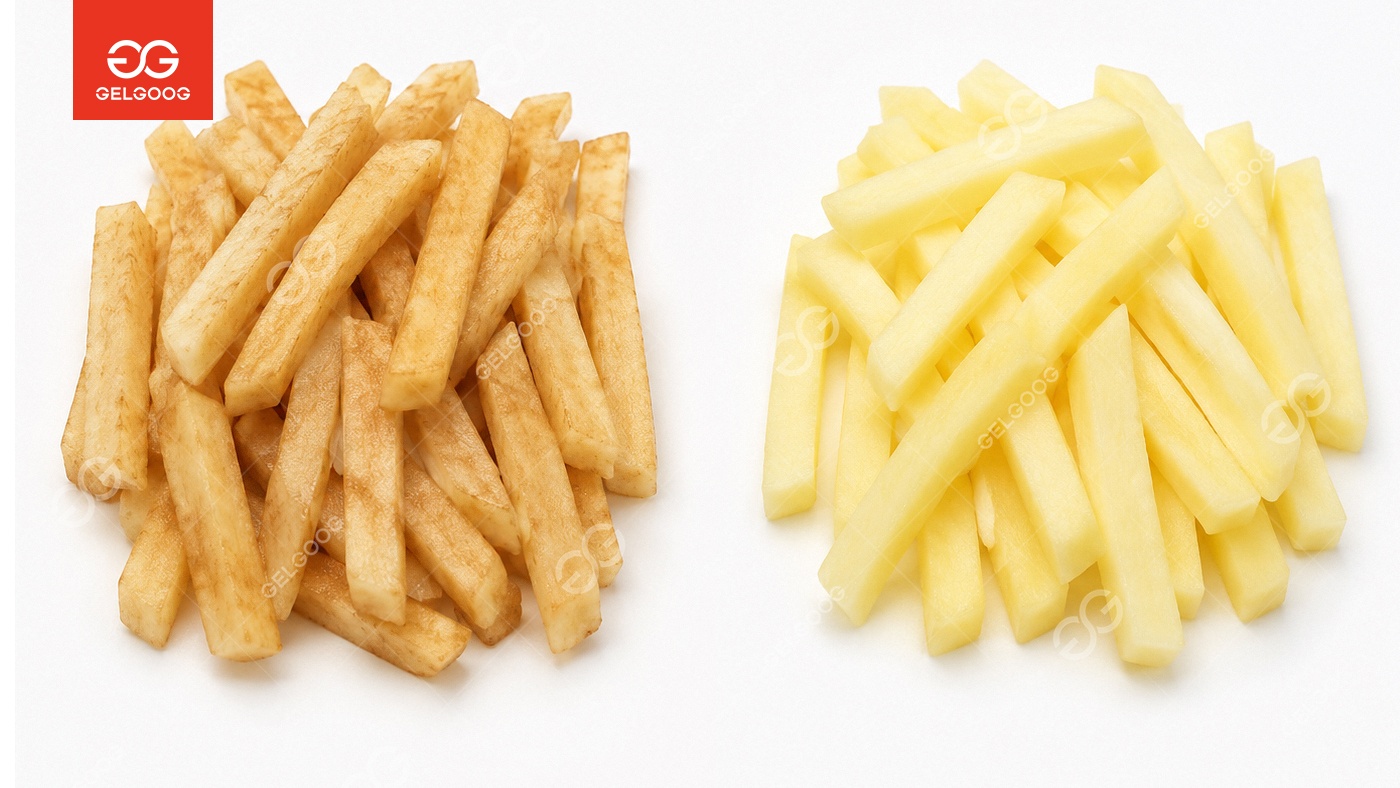
Common Causes of Fresh-Cut French Fry Discoloration
| Cause | Impact on Product |
|---|
| Delayed washing after cutting | Faster oxidation |
| Excessive surface starch | Increased discoloration risk |
| High processing temperatures | Accelerated enzyme activity |
| Inadequate blanching | Poor color stability |
| Excess oxygen inside packaging | Continued browning |
| Weak cold chain management | Reduced shelf life |
| Long storage periods | Increased color degradation |
How Do Commercial Processors Prevent Fresh-Cut Fries from Turning Brown?
Most successful processors rely on process control rather than a single additive. The goal is to minimize oxidation throughout the entire production chain.
| Processing Stage | Main Purpose |
|---|
| Cold Washing | Remove surface starch and reduce oxidation |
| Blanching | Reduce enzyme activity |
| Cooling | Stop further thermal reactions |
| Packaging | Limit oxygen exposure |
| Cold Storage | Slow discoloration and microbial growth |
| Optional Anti-Oxidants | Provide additional protection |
Step 1: Cold Washing After Cutting
Cold washing is one of the most important operations in fresh-cut French fry processing. Immediately after cutting, potato strips contain a significant amount of surface starch.
| Benefit | Description |
|---|
| Removes surface starch | Improves product appearance |
| Reduces oxidation speed | Helps maintain natural color |
| Lowers product temperature | Slows enzymatic activity |
| Cleans product surface | Improves overall quality |
Step 2: Blanching for Color Stability
Blanching is widely used in fresh-cut potato processing because it helps reduce enzymatic activity and improve product consistency.
| Benefit | Result |
|---|
| Reduces enzyme activity | Less browning |
| Improves color consistency | Better product appearance |
| Supports shelf life | Improved storage stability |
| Enhances process control | More uniform quality |
Step 3: Rapid Cooling After Blanching
Cooling is a critical but often overlooked step. After blanching, potatoes should be cooled quickly to prevent excessive heat exposure.
| Without Proper Cooling | With Proper Cooling |
|---|
| Continued product heating | Stable product temperature |
| Increased quality variation | Improved consistency |
| Reduced shelf life | Better storage performance |
| Higher discoloration risk | Improved color retention |
Step 4: Vacuum Packaging or MAP Packaging
Packaging plays a major role in controlling discoloration because oxygen is one of the primary drivers of browning.
| Packaging Method | Oxygen Control | Color Protection |
|---|
| Conventional Packaging | Low | Basic |
| Vacuum Packaging | High | Very Good |
| Modified Atmosphere Packaging (MAP) | Very High | Excellent |
Step 5: Maintain a Reliable Cold Chain
Even the best processing line cannot compensate for poor temperature management during storage and transportation.
| Benefit | Impact |
|---|
| Slows oxidation | Better color retention |
| Reduces microbial growth | Improved food safety |
| Extends shelf life | Less product waste |
| Maintains product quality | Better customer satisfaction |
Are Anti-Browning Additives Necessary?
The answer depends on the target market, shelf-life requirements, and production process. Additives may provide additional protection, but they cannot compensate for poor process control.
Successful processors focus on washing, blanching, cooling, packaging, and cold chain management as the core system.
Common Mistakes That Lead to Browning
| Common Mistake | Possible Consequence |
|---|
| Delayed washing after cutting | Rapid oxidation |
| Inadequate starch removal | Uneven appearance |
| Poor blanching control | Increased browning |
| Slow cooling | Quality deterioration |
| Excess oxygen in packaging | Continued discoloration |
| Weak cold chain management | Reduced shelf life |
| Inconsistent operating procedures | Batch-to-batch variation |
Recommended Fresh-Cut French Fry Processing Flow
| Step | Process |
|---|
| 1 | Potato Receiving |
| 2 | Washing |
| 3 | Peeling |
| 4 | Cutting |
| 5 | Cold Washing |
| 6 | Blanching |
| 7 | Cooling |
| 8 | Dewatering |
| 9 | Packaging |
| 10 | Cold Storage |
| 11 | Distribution |
Frequently Asked Questions
Why do fresh-cut French fries turn brown after cutting?
Browning occurs when natural enzymes inside potatoes react with oxygen after cutting.
Is blanching necessary?
Yes, it helps reduce enzyme activity and improve color stability.
Does vacuum packaging prevent browning?
It significantly reduces oxygen exposure and slows discoloration.
Is MAP packaging better?
MAP generally provides better oxygen control and longer shelf life.
Can additives fully prevent browning?
No, process control remains essential.
Most important factor?
A combined system of washing, blanching, cooling, packaging, and cold chain management.
Conclusion
Preventing fresh-cut French fries from turning brown requires a full process control strategy rather than reliance on additives alone. A properly designed fresh-cut french fries production line ensures consistent color, extended shelf life, and higher product quality. If you need more information,welcome leave message freely.

 Fruit Vegetable Processing
 Nuts Processing Solution
 Pastry Processing Solution