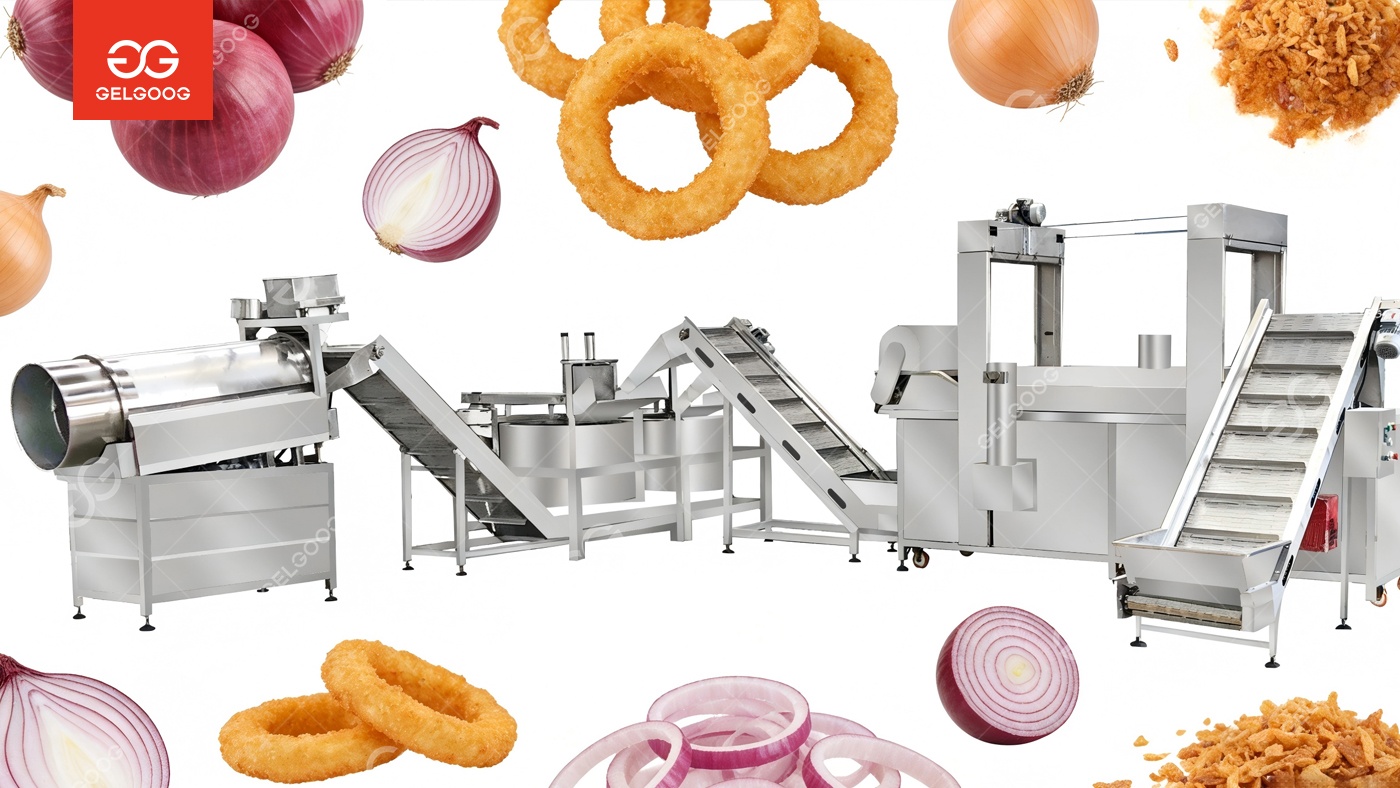
Industrial fried onion production requires precision at every stage. This interactive guide explains each step of the fried onion production process and fried shallots production process , provides optimization tips, common problem solutions, and showcases industrial equipment and parameters for high-quality output. By following these guidelines, manufacturers can achieve uniform crispiness, ideal color, and maximum efficiency while complying with ISO, HACCP, CE standards.
This fried shallots production process follows similar steps including sorting, peeling, slicing, blanching, frying, de-oiling, and packaging.
Request a Turnkey Fried Onion Production Solution
Onion Sorting
Sorting ensures uniform onion size and removes defective or moldy onions. Mechanical graders and optical sorters achieve >95% accuracy. Proper sorting supports even frying and crisp texture.
Tip: Sort onions by size to reduce frying variation.
Large slices fry slower, small slices may overcook. Use multiple sorting passes for consistent quality.
Common Issue: Mixed sizes cause uneven color and texture.
Solution: Manual inspection or additional sorting passes.
Onion Peeling
Onion peeling machine is a crucial step in both the fried onion production process and the fried shallots production process. Industrial methods include:
Mechanical peeling: Machines remove outer skins without damaging the onion layers.
Washing: Onions are thoroughly cleaned to remove dirt, pesticides, and debris.
Tip: Adjust peeling time based on onion variety.
Incomplete peeling leads to dark spots after frying. Optimize machine speed, pressure, and perform quality checks.
Common Issue: Residual skin may cause dark patches.
Solution: Calibrate machine daily and check variety differences.
Onion Slicing Technology
Uniform slices (1–2 mm) are essential for even frying. Slicers produce rings, julienne, or thin slices for various production needs.
Tip: Calibrate slicer daily to maintain slice thickness consistency.
Uneven slices cause over- or under-fried onions. Adjust blade and feed rate based on onion variety.
Common Issue: Variation in slice thickness leads to inconsistent frying.
Solution: Standardize blade maintenance and slice size settings.
Pretreatment & Moisture Control
Blanching (70–90°C hot water or steam) inactivates enzymes, improves color, and reduces frying time. Pre-frying moisture should be 60–65%; final product 3–5%.
Tip: Adjust blanching time based on onion variety to prevent soggy texture.
Excess moisture causes oil splatter and soft texture. Use drip drying and moisture control equipment.
Common Issue: High moisture reduces crispiness.
Solution: Precise moisture measurement before frying.
Continuous Frying Process
Continuous belt/tunnel fryers maintain oil at 150–180°C for uniform frying. Frying time varies with slice thickness.
| Parameter | Recommended |
|---|
| Oil Temperature | 150–180°C Maintain ±5°C for consistent color and crispiness. |
| Frying Time | 5–10 min Adjust based on slice thickness (1–2 mm recommended). |
| Throughput | 1–5 tons/hour Depends on fryer size and belt speed. |
De-oiling Technology
Vibrating/centrifugal de-oil systems remove 90%+ of residual oil, reducing content to 5–7%, improving shelf life and crispness.
Tip: Adjust vibration speed carefully to prevent product breakage.
High residual oil reduces shelf life. Calibratede-oiling equipment per batch.
Common Issue: Too much oil retention.
Solution: Adjust machine settings and perform batch tests.
FAQ: Fried Onion Production
1. How can I ensure consistent crispiness?
Use uniform slices, maintain oil temperature, control pre-frying moisture, and adjust frying time based on slice thickness.
2. How to prevent dark spots in fried onion and fried shallots production process??
Sort onions carefully, peel completely, blanch properly, and monitor frying temperature.
3. How to reduce oil consumption?
Optimize frying time, use efficient de-oiling systems, and maintain correct moisture levels before frying.
4. How to handle soft or soggy onions?
Check pre-frying moisture, blanching time, slice thickness, and maintain consistent oil temperature.
5. How long do packaged fried onions last?
Vacuum or nitrogen-flushed packaging: 6–12 months depending on storage conditions.
Get a Custom Fried Onion & Fried Shallots Production Solution Today

 Fruit Vegetable Processing
 Nuts Processing Solution
 Pastry Processing Solution